Amlodipine Side Effects You Should Know (From Common to Rare)
Amlodipine is one of the most commonly prescribed medications for high blood pressure and heart conditions. It belongs to a class of drugs known as calcium channel blockers, which work by relaxing blood vessels and improving blood flow.
For most people, amlodipine is safe and effective. However, like any medication, it can cause side effects. Some are mild and temporary, while others — although rare — can be serious and require immediate medical attention.
In this article, we’ll cover 15 amlodipine side effects, from the most common to the most dangerous.
1. Swelling in Legs & Ankles (Edema)
This is the most frequently reported side effect.
Amlodipine can cause fluid to build up in the lower limbs, leading to visible swelling in the feet and ankles. It’s usually harmless but can be uncomfortable.
2. Headache
Headaches may occur when starting the medication. This happens because blood vessels are expanding, and your body is adjusting to the change.
3. Dizziness
Because amlodipine lowers blood pressure, some people feel dizzy, especially when standing up quickly. This effect is more noticeable during the first days of treatment.
4. Flushing (Redness)
You may experience a warm sensation or redness in your face. This is caused by increased blood circulation near the skin.
5. Fatigue
Feeling tired or lacking energy is another common complaint. This usually improves over time as your body adapts.
6. Heart Palpitations
Some people notice a faster or irregular heartbeat. While often harmless, persistent palpitations should be discussed with a doctor.
7. Nausea
Amlodipine can sometimes irritate the stomach, leading to nausea or a general feeling of discomfort.
8. Abdominal Pain
Mild stomach pain or digestive discomfort may occur, especially when the body is still adjusting to the medication.
9. Sleepiness
Some users report feeling sleepy or less alert than usual, particularly after taking the medication.
10. Muscle Cramps
Muscle pain or cramps can happen in rare cases, although they are not very common.
11. Skin Rash or Itching
An allergic reaction may cause itching, redness, or a mild rash. If symptoms worsen, medical advice is recommended.
12. Low Blood Pressure (Hypotension)
If blood pressure drops too much, it can lead to symptoms such as:
- Weakness
- Fainting
- Blurred vision
This condition should be monitored carefully.
13. Gum Swelling (Gingival Hyperplasia)
Long-term use of amlodipine may lead to swollen or overgrown gums. Maintaining good oral hygiene can help reduce this effect.
14. Liver Problems (Rare)
In rare cases, amlodipine may affect liver function. Warning signs include:
- Yellowing of the skin or eyes
- Dark-colored urine
- Persistent fatigue
These symptoms require medical evaluation.
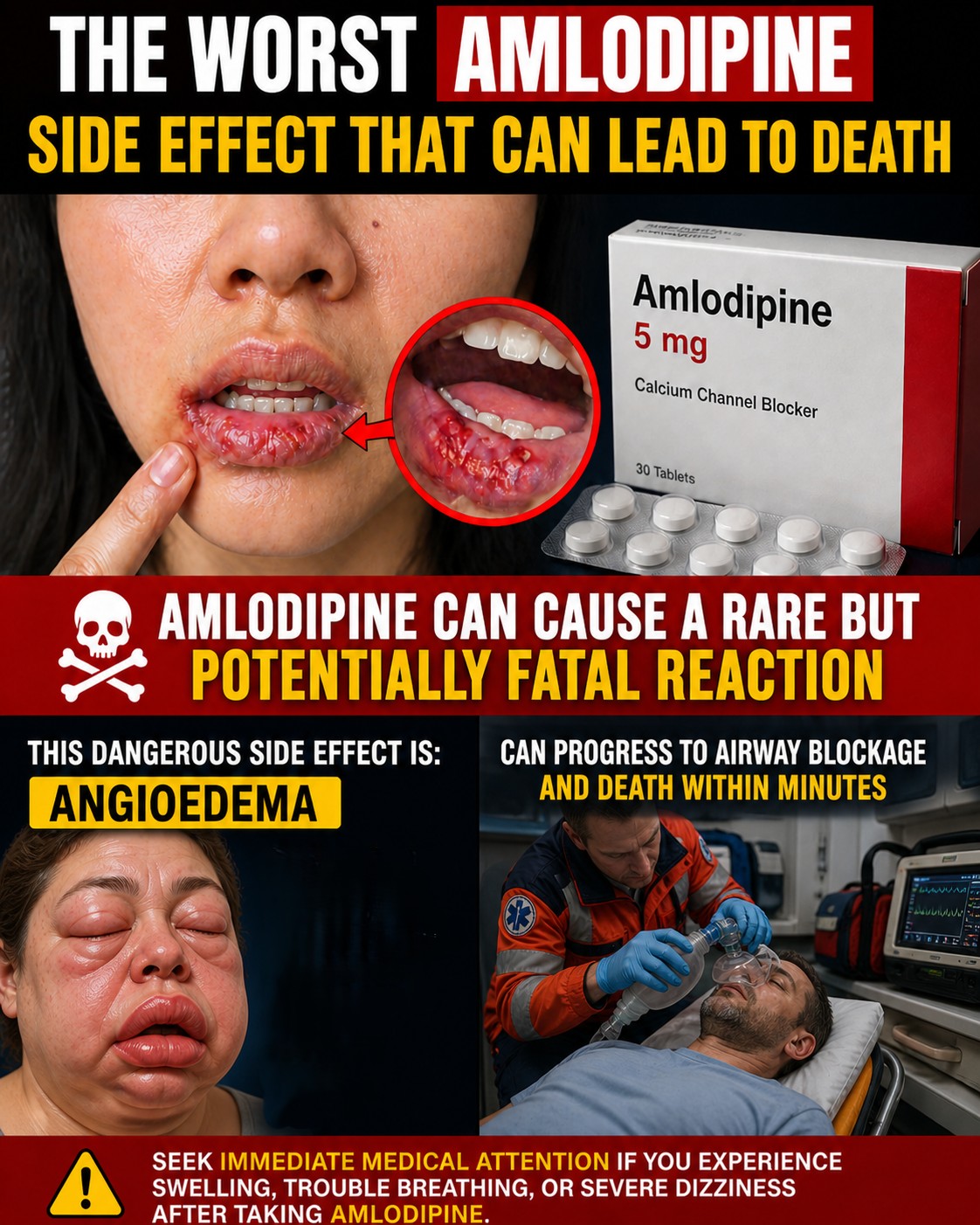
15. ⚠️ Severe Allergic Reaction (Angioedema)
This is the most dangerous side effect, although it is very rare.
Angioedema causes sudden swelling beneath the skin, especially in the:
- Lips
- Face
- Tongue
- Throat
The biggest risk is that swelling in the throat can block the airway, making it difficult or impossible to breathe. In extreme cases, this can become life-threatening.
🚨 When Should You Seek Medical Help?
You should seek immediate medical attention if you experience:
- Difficulty breathing
- Swelling of the face, lips, or tongue
- Severe dizziness or fainting
- Chest pain
These symptoms may indicate a serious reaction that requires urgent care.
✅ Final Thoughts
Amlodipine is generally a safe and effective medication for managing high blood pressure. Most side effects are mild and tend to disappear as your body adjusts.
However, being aware of rare but serious conditions — especially angioedema — is essential. Early recognition and quick action can make a critical difference.
👉 Always follow your doctor’s advice, monitor your symptoms, and never ignore warning signs.