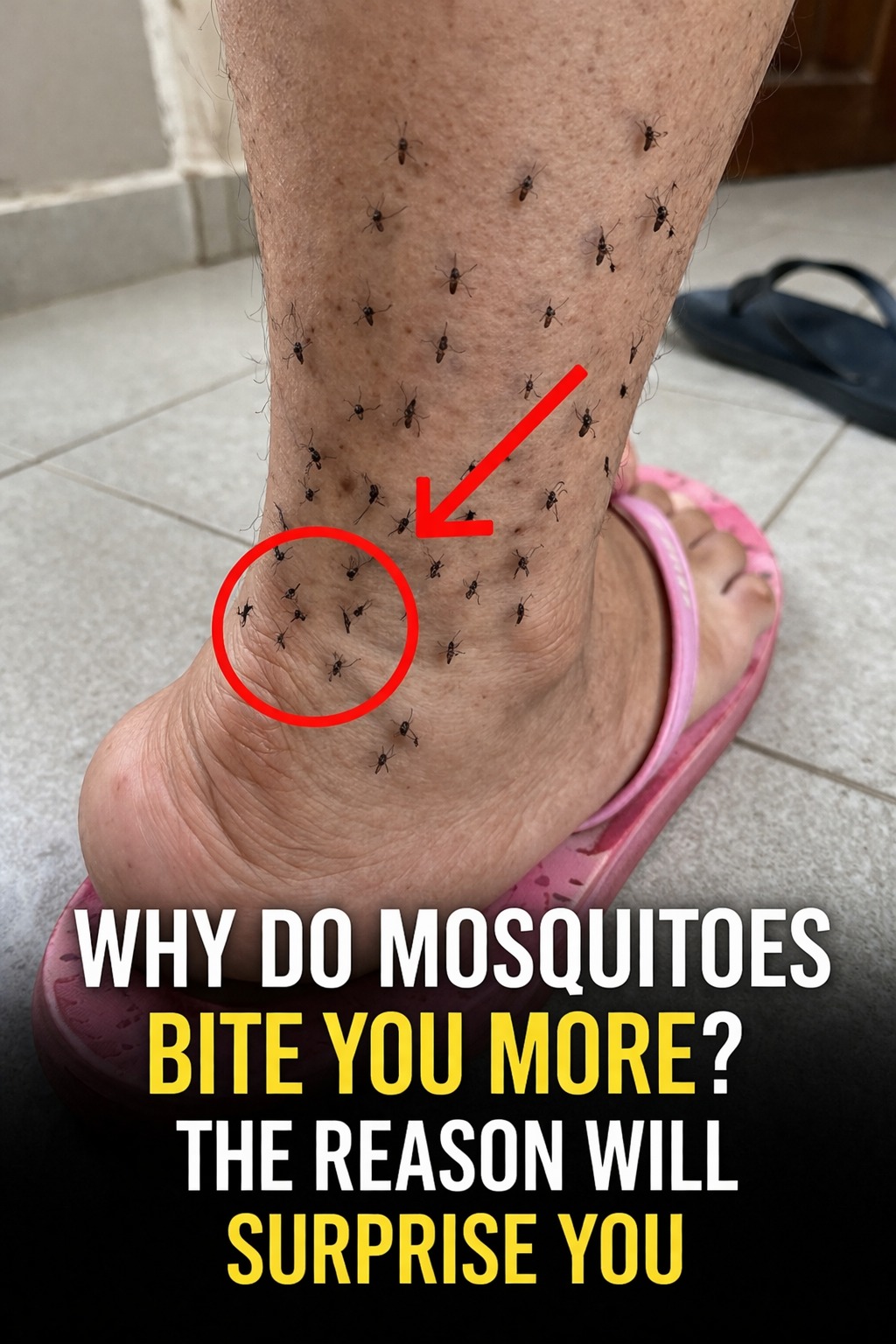
Here is the part that might surprise you the most. Recent research points to your skin bacteria as one of the biggest drivers of mosquito attraction. Certain people nicknamed mosquito magnets produce higher levels of carboxylic acids on their skin. These fatty acids come from the unique mix of bacteria living on your body. A 2022 study found that individuals with more of these specific acids on their skin attracted far more mosquitoes and this difference stayed consistent over years.
This explains why the image you see often shows mosquitoes clustering around ankles and feet. That area has more sweat glands and a higher concentration of bacteria that produce exactly the odors mosquitoes love. It is not about dirt or poor hygiene. It is simply your personal skin ecosystem at work. Genetics play a part too with identical twins showing similar attraction levels in studies. Your DNA helps shape both your skin microbiome and the chemicals it creates.

Blood Type and Genetics Add Another Layer
Blood type comes into the picture as well. Multiple studies including one from 2004 show that mosquitoes land on people with Type O blood nearly twice as often as those with Type A. Type B falls somewhere in the middle. About 85 percent of people naturally secrete a chemical signal of their blood type through their skin making the preference even stronger. Genetics overall account for up to 67 percent of the variation in how attractive you are to mosquitoes according to twin research. So if your parents were always the ones getting bitten you might have inherited the same tendency.
Other Factors That Can Make You a Bigger Target
Several everyday habits and conditions can tip the scales in favor of more bites. Pregnancy increases carbon dioxide output and body heat by noticeable amounts leading to roughly twice as many bites in some studies. Infections such as malaria parasites have been shown to make people more appealing too though this is less common in everyday life. Even the color of your clothes matters mosquitoes are drawn to dark shades like black red and orange more than light ones.
Here are the top factors that research links to higher mosquito attraction:
- Higher carbon dioxide exhalation from size activity or pregnancy
- Elevated body heat and sweat containing lactic acid
- Skin bacteria producing more carboxylic acids
- Blood type O and genetic predisposition
- Recent alcohol consumption or exercise
- Dark clothing colors
On the flip side having a more diverse mix of skin bacteria can sometimes reduce appeal. This is why scientists are exploring ways to influence skin microbes as a future repellent strategy.
Simple Actionable Tips to Reduce Mosquito Bites Starting Today
You cannot change your genetics or blood type but you can take practical steps to make yourself less noticeable. These evidence based tips work for most people and can be put into action immediately.
- Apply EPA registered repellents containing DEET picaridin or oil of lemon eucalyptus to exposed skin and clothing following label instructions carefully.
- Wear loose fitting long sleeves and pants in light colors especially during dawn and dusk when mosquitoes are most active.
- Avoid standing water around your home since it is where mosquitoes breed empty plant pots clean gutters and change pet water bowls weekly.
- Use fans on your patio the moving air disrupts mosquitoes flight patterns and disperses your carbon dioxide and scent.
- Shower after exercising to remove sweat and lactic acid before heading outdoors again.
- Consider timing your outdoor activities for times when mosquitoes are less active or choose breezy open areas over shaded humid spots.
Following these habits consistently can cut down bites dramatically even if you are naturally more attractive to mosquitoes.

Myths Versus Facts About Mosquito Bites
Don't Miss The Rest! Press Next Button Below To Continue Reading.